Friday, August 12, 2016

9th Hole

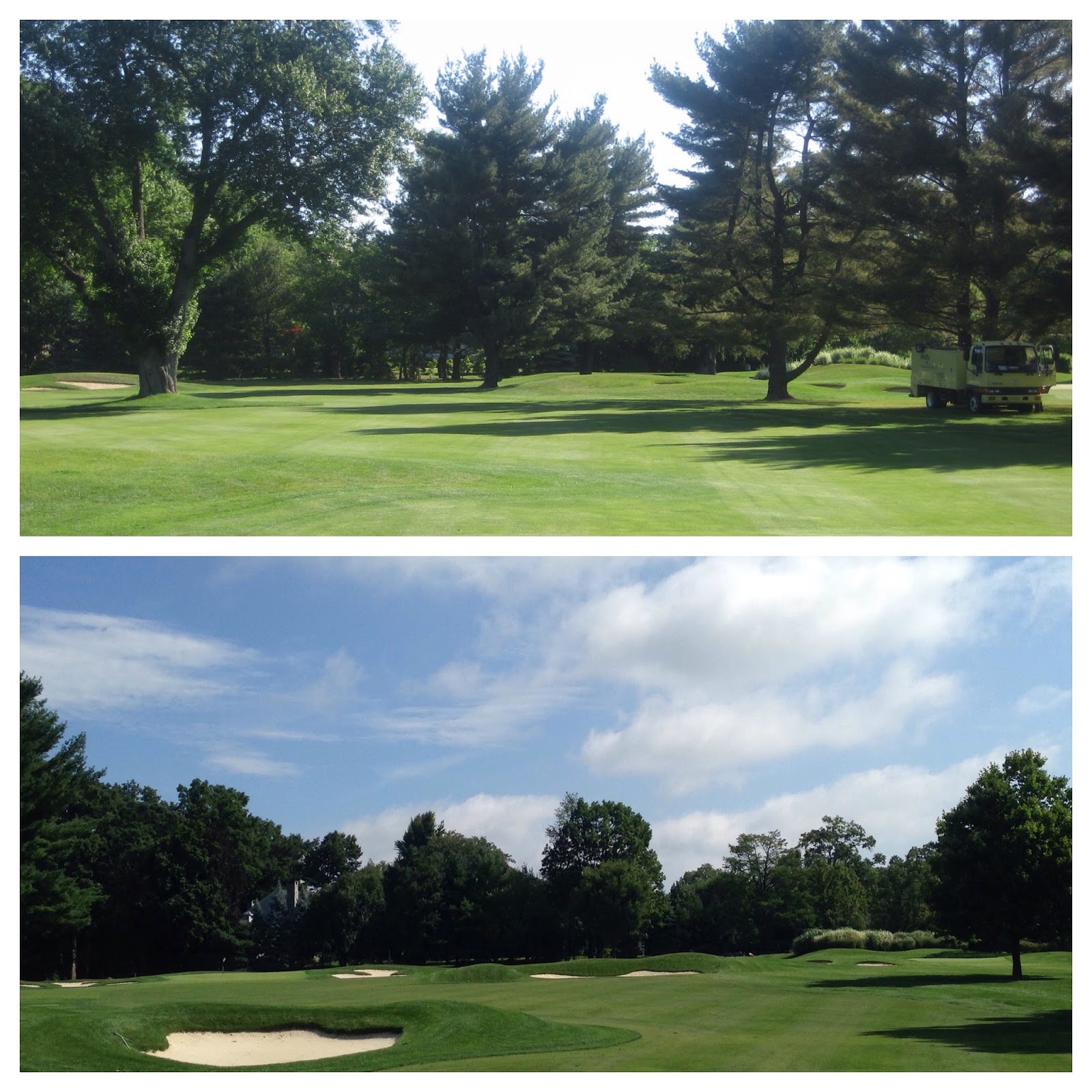
All phases of construction have been completed on the 9th hole and the new bunker complex is open for play. Please follow the cart signs and obey ropes when returning to the 1st tee.

9th Hole Completed

Before and After

Before and After


Wednesday, July 27, 2016

The Rough

The warm humid temperatures and recent rainfall, 1 inch Monday afternoon, have caused an explosion of the disease Dollar Spot in the rough around the course. Dollar Spot is the most common disease in the Northeast and in the early morning hours the mycellium actually looks like snow and boy do I wish it was snow. The good news is that we treat greens, tees, approaches, and fairways for this disease and we are clear of any disease in those areas. If the weather pattern continues we will consider spot treating these areas of the rough otherwise our Labor Day application of fertilizer in the rough will help grow out these areas from damage.

Active Dollar Spot

The greens will continue to be a little slower for the rest of the week as we are only single mowing them in the mornings. We will return to our normal mowing and rolling of the greens Saturday morning. A little defense now will ensure success for the remainder of the season. For those attending the PGA Championship this weekend enjoy all that major golf has to offer.

Saturday, July 16, 2016

Mid-July Course Update

The course has been receiving a good amount of rain so far in July with over 3 inches to date but the typical hazy, hot, and humid for July have also been in full effect. Excessive moisture during periods of hot and humid weather is not good for turf especially the roots and pocketed areas around greens are prime for these conditions. We have been running the clubs new portable 50" fan behind the 6th green to help the rear portion of the green that normally thins out during summer. Untreated rough areas also have disease present in the form of Dollar Spot due to the wet and humid weather. All the short turf is protected from this disease. Here is the update from the USGA concerning our area: Oh Boy, Here comes the Heat
 I am asked many questions and receive complaints about aeration in the spring and fall along with comments when we dry-ject the greens in August but the photo below shows how we are making improvements in the soil profile. 7 plus inch long roots coming from a deep tine aeration hole on the 5th green in mid-July.
 Aeration is a cumulative process, thankfully we have been on an aggressive program for 4 years because this week we had a fast moving intense thunderstorm that not only knocked down 2 trees on the 8th hole and 1 tree in the parking lot but it brought over a half inch of rain. Following the storm I was back on the course and there was no standing water on the greens. This is very important because the sun returned following the storm and it was a steamy 88 degrees until dusk.
 The past 10 days was not only difficult weather wise but we were in full construction mode on the 9th hole finishing the final phase, the replacement bunker complex for the Silver Maple. Once the new bunker feature is open for play, the fairway will be 55 feet wide on the left now (same width as the 3rd fairway) and the bunker will play 45 yards to the center of the green. PLEASE DO NOT WALK IN THE ROPED AREA NOT EVEN FOR YOUR BALL July is a difficult month to maintain established turf and extremely difficult to maintain an area of sod. Any damage to the sod while its tender will kill the turf and prolong the time its closed for play. As a member please remind those in your group not to enter the roped area.

Friday, July 1, 2016

Course Update -July 1st

The course went 18 days with no rain in the month of June with warm temperatures, low humidity, and at times breezy conditions, perfect weather for golf but the turf requires plenty of moisture during periods like this. A lucky string of events started this week with verticutting the greens followed by a wetting agent spray Monday on greens, approaches, tees and fairways followed by two tenths of inch of rain Monday night then 2.2 inches of rain Tuesday night. The greens were flushed of all the sodium build up thanks to the deluge and the women were still able to have their member guest tournament with no delays on reasonably smooth putting surfaces. Areas of the rough and bunkers that have weak or no irrigation are bouncing back thanks to the rain and we have been able to keep the irrigation system turned off for the past 4 nights after relying heavily on the system for most of June. I was thankful every morning to see the system running at full capacity thanks to the capital investments on both of the club's pumping stations and wells implemented over the past two winters.

Madison Golf Club
Rainfall Month to Month
Year April May June  July  August September  October November Total
2011 6.75 6.1 4.05 3.6 17.95 8.3 3.05 4.6 54.4
2012 3.75 6.45 3.35 2.3 4.45 4.95 5.2 0.7 31.15
2013 2.35 7.25 9.4 5.9 5.05 2.75 0.8 0.95 34.45
2014 5.78 6.15 5.05 6.85 2.5 3.1 4.05 1.8 35.28
2015 1.38 1.7 7.4 1.8 2.35 4.6 4.8 2.1 26.13
2016 1.75 3.6 3.8

I recently found an interesting map of the past few years showing the rain deficit for the east coast and it matches up to my records fairly accurately.


Our irrigation water has higher levels of sodium and calcium then we would like but that's the cards we are dealt. The issues begin during long periods without rain and large use of our irrigation water like we had in June. Sodium is predominant to potassium and the turf is attempting to substitute sodium where possible creating weak stomates increasing water consumption, decreasing leaf thickness and suppressing growth. The chart below shows our in-ground sensors picking up the sodium being flushed from the recent rain events.


The two pictures below are from wednesday morning after the 2.2" rain event. The bunkers on the 8th hole do not have liners and they washed out yet the bunkers on 9 fairway with liners had no washouts. The liners are working and keeping the bunkers free of contaminants.
8 Greenside Bunker Washed Out


9 Fairway Bunker no wash-outs

Sunday, June 19, 2016

Course Update

Summer officially begins tomorrow but summer-like conditions have already arrived with temperatures in the upper 80's to lower 90's predicted for the next few days. The good news is the night time temperatures are nice and cool. This week we had a visit from Steve McDonald of Turf Grass Disease Solutions, who helped sample the golf course for annual bluegrass weevils, the single biggest pest on the course. Steve visits over 300 courses annually and conducts independent research for many manufacturers and the USGA. I discussed with Steve our disease and insect control program along with nutrient and aeration management issues. Steve was able to recommend a different product to help with the weeds in the native areas along with providing a better theory of how the calcium in our irrigation water is affecting the potassium levels in the soil. We are monitoring the nutrient levels through our bi-weekly tissue testing program.

Steve using his weevil vacuum on #2
 The late spring has brought little rain with little rain in the forecast bringing us to the Moderate Drought Level. Currently we are not facing any restrictions in regards to irrigation although we will continue to use hoses to water certain areas reducing the amount of water we are consuming.

The image below is from the USGA and describes water usage around the golf course.


Saturday, June 11, 2016

Course Update

The weather is really perfect and unexpected for this time of year but that goes with the theme of the 2016 season which is nothing has been normal, but I will take 50 degree night time temperatures in June as long as I can. Greens have been verticut the last two Monday's removing longer straglers of turf smoothing the surface and creating more upright turf for better playability and health of the greens. We will be topdressing the greens this week continuing to follow our organic matter dilution program. The program has different parts including aeration, topdressing, verticutting, brushing, venting, and Dry-jecting.

Tuesday June 14th you may encounter some sprinklers running during play. We will be conducting a certified flow test of our two wells as required by our water allocation permit issued by the NJ State DEP. A certified contractor will use an external portable flow meter to ensure that our permanent fixed flow meters are accurate. We record the amount of water we use monthly on both wells and report these values to the DEP at the end of the year. The state requires we have our flow meters calibrated and certified on a 3 year basis.

Hard to imagine the 9th Hole without the bunkers on the left

Saturday, June 4, 2016

June USGA Update

Spring in the Northeast Region always is unpredictable. While dry conditions and cool temperatures have been welcomed compared to the wet weather last season, exceptionally dry weather in New England and parts of Canada has some superintendents worrying about rainfall this summer. Although a severe drought has not occurred in the Northeast Region for more than 15 years, a Drought-Emergency Plan is a document every golf facility should develop in case dry weather progresses into a drought.

Putting surfaces are performing well throughout the Northeast Region and Poa annua seedheads will diminish over the next few weeks. Many superintendents will begin to regularly topdress and groom putting greens to keep them smooth and firm through the summer. These programs help smooth imperfections created by seedheads, ball marks and traffic but can be challenging for superintendents to schedule during a busy golf calendar. Golfers should be patient if topdressing or grooming are performed during or just prior to their round.
Golf courses with bermudagrass playing surfaces are experiencing a slow transition this spring due to below-average temperatures in May. This has resulted in more weeds and traffic stress because bermudagrass has not been rapidly growing. The situation will improve as temperatures begin to increase.
Perhaps the biggest topic of discussion among superintendents in the Northeast Region is the absence of annual bluegrass weevils. The hope is that annual bluegrass weevil populations are low due to early spring temperature fluctuations, but superintendents should continue to meticulously scout. Annual bluegrass weevil larvae have been observed and damage could quickly develop.